Public art is woven into the fabric of Lincoln Square, adding moments of creativity and surprise to everyday life in the neighborhood. From iconic sculptures to eye-catching mosaics, these pieces animate our public spaces—inviting residents and visitors alike to pause, reflect, and engage in new ways.
Artemis, Acrobats, Divas and Dancers
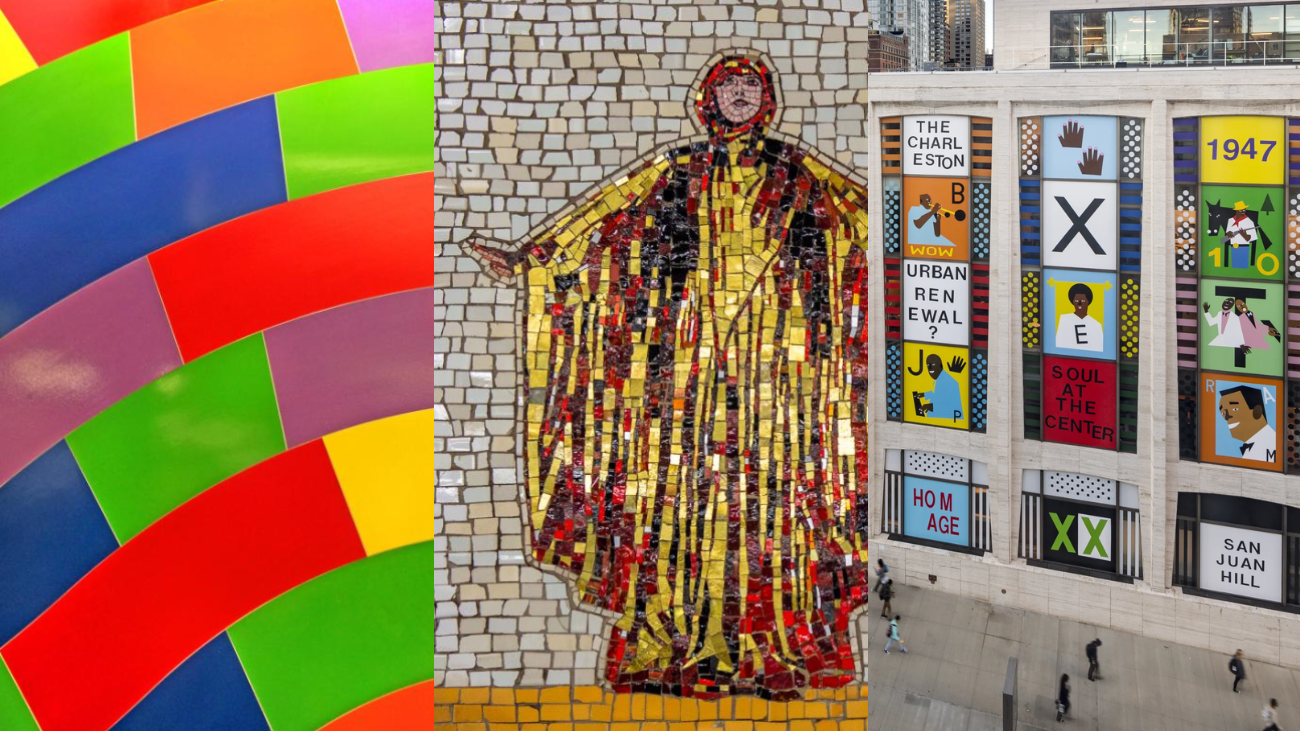
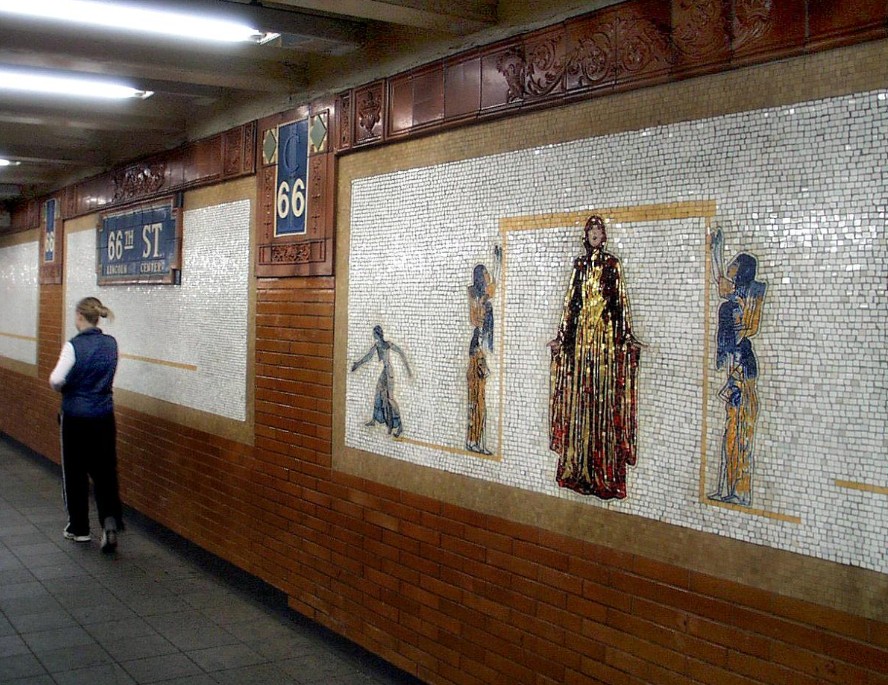
In a nod to both the Lincoln Center campus above, as well as the artistic character of the Upper West Side neighborhood, the walls of the 66th Street/Lincoln Center subway station are adorned with a series of 22 glass mosaic tiles by feminist artist Nancy Spero (1926-2009). Throughout the piece the central female icon of the opera, the Diva, is featured in various states of movement creating the illusion of dancing when viewed from a moving subway train.
Whirls and Twirls
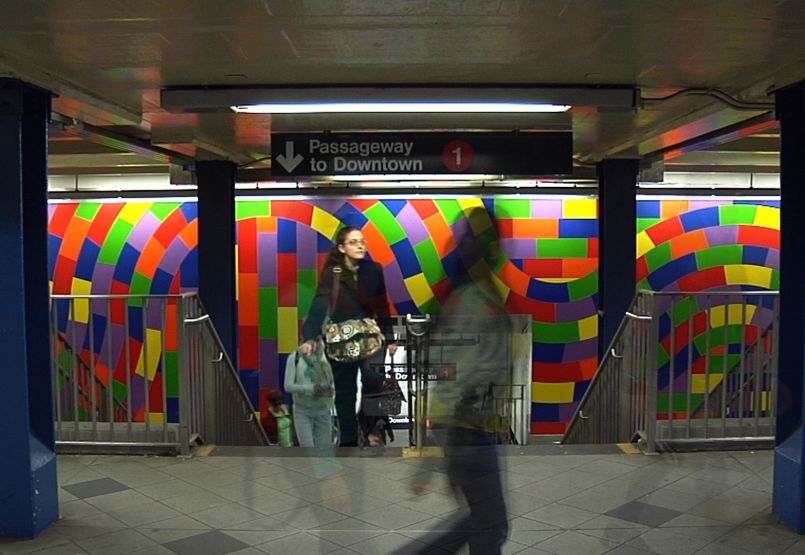
The energetic porcelain tile wall drawing on the mezzanine wall of the 59th Street/Columbus Circle subway station entrance at Broadway and 60th Street is a creation of the late conceptual and minimalist artist Sol LeWitt (1928 – 2007), whose works can be found at New York City’s Museum of Modern Art, London’s Tate Modern, and the Pompidou Center in Paris, to name a few. www.mta.info/art
The Sources of Music and The Triumph of Music
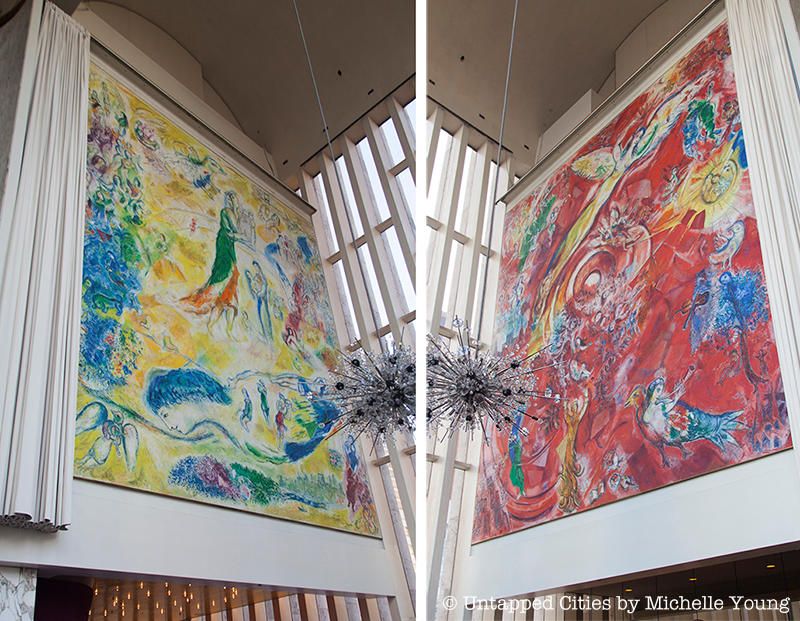
Painter Marc Chagall completed this pair of murals, which tower above the lobby of the Metropolitan Opera House, in 1966. On the left, The Triumph of Music, depicts an angel amid a swirl of musicians, dancers, and animals. On the right, The Sources of Music takes inspiration from Chagall’s heritage and Mozart’s The Magic Flute. Chagall intended for the murals’ position to be swapped, with Sources on the left and Triumph on the right—but they remain in this misplaced arrangement to this day. The murals, each 30 feet by 36 feet, can be seen from outside the glass windows of the Metropolitan Opera House.
Adam + Eve at Deutsche Bank Center
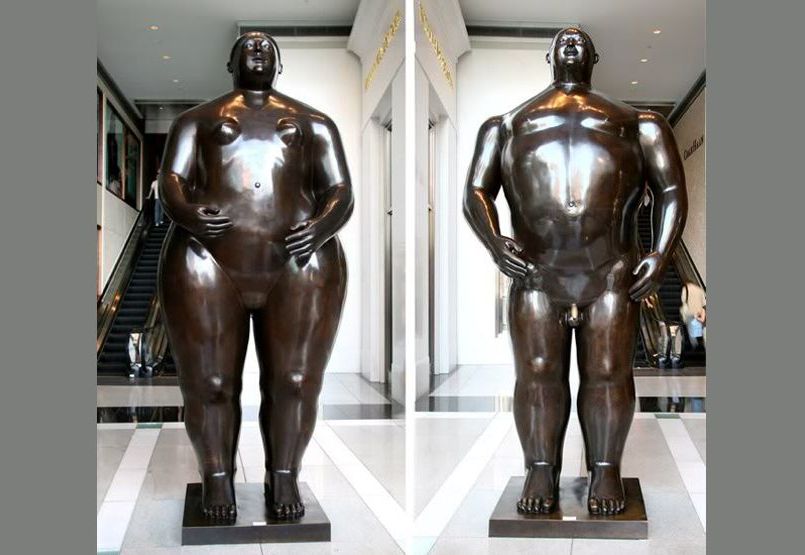
Appearing in many a tourist’s photograph, these supersized bronze sculptures on the ground floor of The Shops at Columbus Circle are the works of Columbian artist Fernando Botero, whose proportionally exaggerated figures in paintings and sculpture have brought him worldwide recognition.
Nina Chanel Abney, San Juan Heal
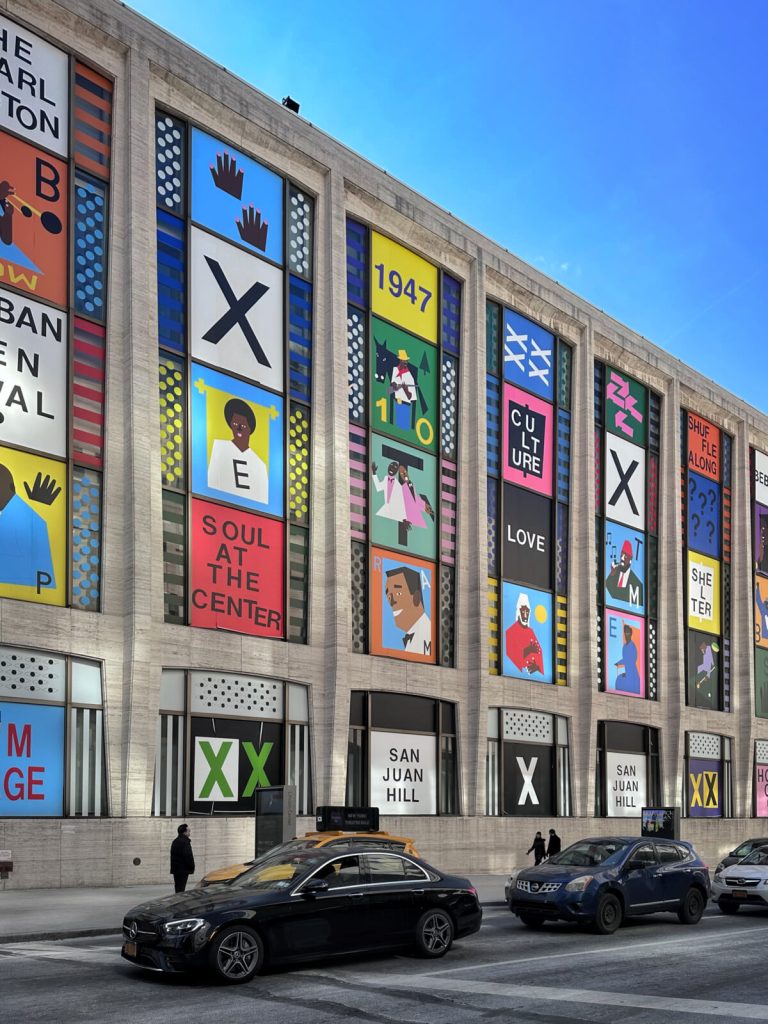
Nina Chanel Abney’s monumental work of art for the façade of David Geffen Hall pays homage to San Juan Hill. In the 1940s and 50s, this predominantly Black and Brown neighborhood was forcibly displaced to make way for redevelopment, including what would become Lincoln Center for the Performing Arts. Abney’s constellation of figures, words, shapes, and symbols reflects the thriving community that lived here. Featured residents include pioneering healthcare workers Edith Carter and Elizabeth Tyler. Also pictured are James P. Johnson, whose music gave rise to the Charleston dance craze, and Thelonious Monk, a pioneer of Bebop and other jazz styles. Reclaiming this important history in her bold and vibrant style, Abney aims to spark curiosity and inspire a more inclusive future.